🎗️Lonny's War Update- October 739, 2023 - October 14, 2025 🎗️
Get link
Facebook
X
Pinterest
Email
Other Apps
🎗️Day 739 that 20 of our hostages are still in Hamas captivity🎗️
**There is nothing more important than getting them home! NOTHING!**
“I’ve never met them,
But I miss them.
I’ve never met them,
but I think of them every second.
I’ve never met them,
but they are my family.
"The time has come, the 'return' in October" (return and seventh or homonyms in Hebrew)
Red Alerts - Missile, Rocket, Drone (UAV - unmanned aerial vehicles), and Terror Attacks and Death Announcements
*
Hostage Updates and the Deal to End the War and Bring Home All the Hostages
Until the last hostage
"The obstacle was Israel – not Hamas": Gershon Baskin reveals the behind the scenes The former mediator in the Shalit deal reveals the behind the scenes of the current deal, describes his personal involvement in the negotiations with Hamas, and explains why, according to him, “Trump forced Netanyahu to end the war”
Gershon Baskin, veteran left-wing activist and who was one of the main mediators in the Shalit deal in the year 2011, published today (Thursday) an extensive statement following the latest developments in the negotiations and the signing of the agreement for ending the fighting. In his statement, Baskin describes step by step the behind the scenes of the deal and the connections he created with Hamas representatives and with people of the American administration. According to him, "It is definitely a morning of celebration. The war is ending. The killing and the destruction will stop. The Israeli hostages will return home – the living and the fallen. For the Palestinians, there will be celebrations with the release of the prisoners and the detainees from Gaza. Israelis and Palestinians will finally be able to breathe."
Dr. Gershon Baskin (Photo: Yossi Aloni)
Baskin adds that there is a need to give thanks to the factors who acted behind the scenes: "First, we all must thank President Trump and his envoy Steve Witkoff, and of course Jared Kushner, who helped apply full pressure on Israel and on Hamas. Trump and Witkoff made sure that the Prime Minister of Qatar, the Egyptian intelligence minister, and the Turkish intelligence chief would be together in the decisive final stage – a brilliant move. Trump bound Netanyahu to the agreement, and the Qataris, Egyptians, and Turks bound Hamas."
He emphasizes that "details are still missing, but the main thing is that this agreement is a declaration of the end of the war – not a temporary ceasefire. There are guarantees that the war will not be renewed after Hamas releases all the hostages." Baskin claims that "this deal could have been done long ago. Hamas agreed to all the same conditions already in September 2024 in what became known as ‘the three-week deal’." According to him, "Then the response of the Israeli negotiators was that ‘the Prime Minister does not agree to end the war’. Although the Hamas proposal was passed to President Biden, his envoy Brett McGurk refused to deviate from the bad deal he was trying to promote."
He adds that also in the contacts he held with American, Qatari, and Egyptian factors, he received a unified answer: "The obstacle was Israel – not Hamas." He emphasizes: "Hamas was ready for a deal to release all the hostages, to give up its rule in Gaza, and to end the war, but Israel was not ready."
Later Baskin reveals that he met on December 26, 2024, with the head of the Shin Bet Ronen Bar. "In that meeting, three weeks before Trump entered the White House, I was asked not to use my unofficial communication channels with Hamas, because ‘in three weeks there will be a ceasefire deal’. Ronen Bar knew it would happen – and so it was on January 19, 2025."
According to him, "It was clear to me that President Biden broadcasts American weakness, while Trump broadcasts strength. From that moment I understood that the war would end only when Trump made a decision that it must end."
Baskin tells that the communication channel with the American envoy Steve Witkoff was created by chance: "In December 2024, Samar Sinjilawi heard that Witkoff was going to give a speech at a Bitcoin conference in Abu Dhabi. He suggested that we invest in traveling there in order to try to initiate first contact with him. We managed to talk with him, exchanged cards, and gave him an article we had written together – an investment that yielded full results." According to him, "From then on, I focused my efforts on communication with Witkoff and on the attempt to build an indirect channel between the American side and Hamas – out of the understanding that the negotiation did not have to be conducted directly with the Israeli side, which would accept anything that Trump would impose on it."
Baskin describes how the negotiation got stuck in its final stages: "On September 8, 2025, Hamas received from the Prime Minister of Qatar the American proposal that I helped formulate together with Hamas representatives… and then Israel bombed the house of Khalil al-Hayya, and this stage of the negotiation ended." He adds that "Hamas believed that the attack would not have taken place without Trump’s approval, and stopped believing in the sincerity of the Americans." However, according to him, on September 19 he received a phone call from Witkoff who told him: “We have a plan.” He tells: “I was asked to convince the Hamas leadership that Trump is serious and that he wants to end the war. During the past few months, I was in contact with eight senior Hamas officials outside Gaza, and three of them conducted conversations with me.” Baskin sums up this stage by saying: "If Trump decides that the war must end – he will impose it on Netanyahu. And that is exactly what happened."
In reference to the day after in Gaza, Baskin emphasizes: "The new government in Gaza – it must be a Palestinian government and not a neo-colonial mechanism not under Palestinian control. Samar Sinjilawi and I gave names of independent Gazans to the American and international factors. They drafted a letter to President Trump in which they declared their willingness to fill a role in the administration in Gaza."
He further adds that "Hamas agreed to such a government from the very beginning, even from last year. We do not know if Mahmoud Abbas will turn to Dr. Nasser al-Kidwa to participate in managing Gaza after Abbas returned him to the Fatah Central Committee." Baskin ends his statement with sharp words: "President Trump deserves the Nobel Peace Prize. Steve Witkoff deserves appreciation for his role. The role of Jared Kushner was critical at this stage, since soon Ron Dermer will work for Kushner and not for Netanyahu. Bringing Kushner to the final stage of the negotiations was a brilliant move that foiled Dermer’s role as one who sabotages any attempt to end the war." According to him, "At 2:00 a.m. all the negotiation participants entered a big room with tables arranged in a square. The Israeli delegation sat facing the Hamas delegation – this was the first time in history that official representatives of Israel and of Hamas sat in the same room. The deal was signed, and now remains to wait for its full implementation. And now – finally – we can breathe again." link
Trump's Peace Deal: "It's Huge and We Can't Underestimate It’s Importance; the War is Over" Trump's peace deal: "It's huge and we can't underestimate it's importance; the war is over": Israeli hostage negotiator, Gershon Baskin, who also played a critical in these negotiations, to Karan Thapar for The Wire.
From Nova, from kibbutzim, from tanks: The stories of the 20 hostages who will be released alive After 738 days of agony, families of 20 hostages who last saw them more than two years ago will be reunited today; 28 hostages, including at least 26 who are dead are still in Gaza; These are the stories of the hostages Hamas has confirmed it will release alive
Alon Ohel
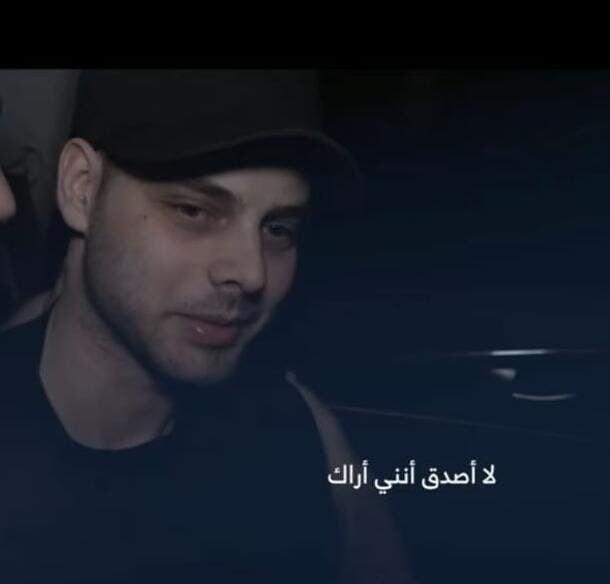
Alon Ohel, 24, from Lavon near Karmiel, was abducted from the Nova music festival. In June, video footage emerged of his abduction alongside Hirsch Goldberg-Polin (who was later killed), Or Levy and Eliya Cohen, all of whom were hiding in what came to be known as the “shelter of death.”
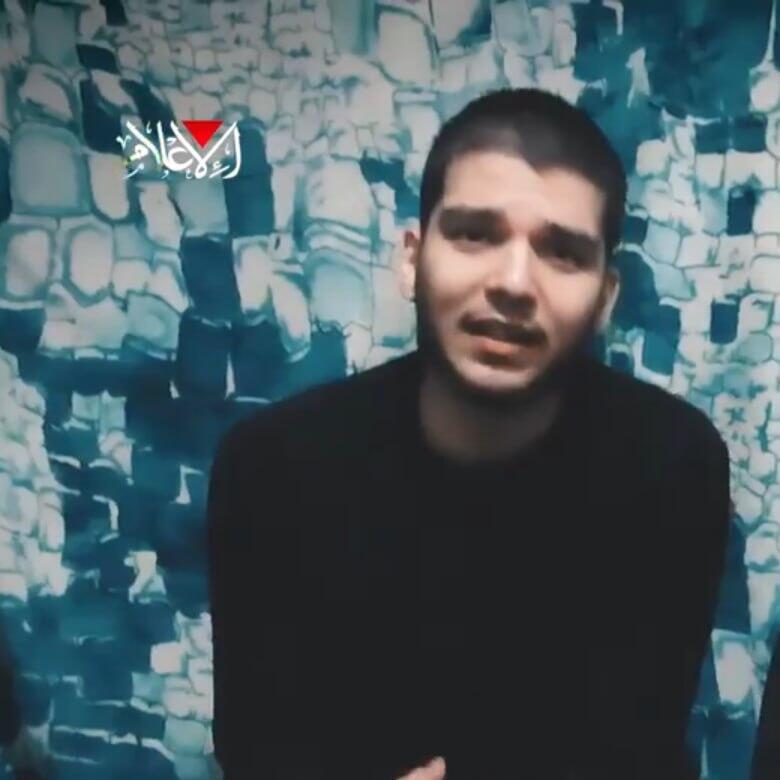
Yosef-Haim Ohana, 24, from Kiryat Malakhi, was taken from the Nova party in Re’im. He had worked as a bartender and stayed behind to help evacuate the wounded.
Yosef-Haim Ohana in sign of life video
(Photo: Hostage Families Forum via Whatsapp)
“A friend told me that when the shooting started, they were helping the injured get to ambulances,” his mother, Miri, said. “They tried to run toward the main road, but someone fired an RPG. Yosef-Haim ran left. The friend ran right and hid under a car. He saw Yosef-Haim peek from behind a nearby car, and then he disappeared.”
The first video of Yosef Chaim surfaced in March, showing him with fellow hostage Elkanah Bohbot. Another video appeared in May. “I see the distress on his face,” said his father, Avi.
Avinatan Or
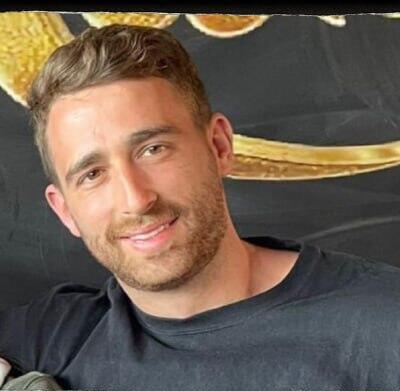
Avinatan Or, 32, from Tel Aviv, was kidnapped from the Nova festival along with his girlfriend, Noa Argamani, who was freed on June 8 in Operation Arnon. One of the most widely seen videos from Oct. 7 shows Argamani being forcibly separated from him as they were taken into Gaza.
Avinatan Or
In March, a video showed Avinatan alive. His family was told he had been held in harsh conditions in central Gaza camps. “Until Avintan comes home, my heart is captive,” Argamani wrote in a social media post.
His father, Yaron, repeatedly called for increased military pressure on Hamas. In April, his brother, Moshe Or, gave an interview to Al Jazeera urging a comprehensive hostage deal — which was ultimately reached six months later.
Rom Breslavski
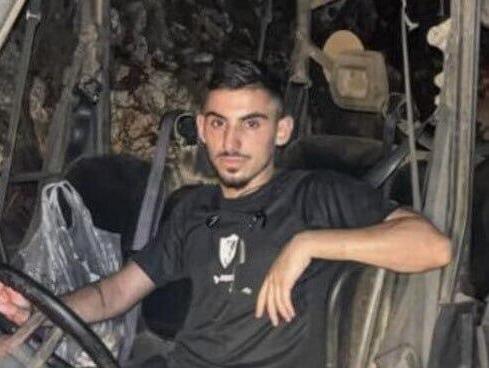
Rom Breslavsky, 21, was working security at the Nova festival. After his abduction, accounts of his bravery circulated widely. He reportedly helped many flee the attack.
Rom Breslavski
“He showed unimaginable courage,” his father said. His mother, Tami, added, “He didn’t see danger or death. Without a weapon or vehicle, he ran between locations and helped people against all odds.”
One survivor recalled being rescued by Rom from inside a garbage compactor: “We hid with about 30 others. The terrorists sprayed it with bullets. I heard a voice after I hung up with my mom — it was Rom. He said, ‘I’m Rom, from the army. I’ll get you out. I’ll protect you.’”
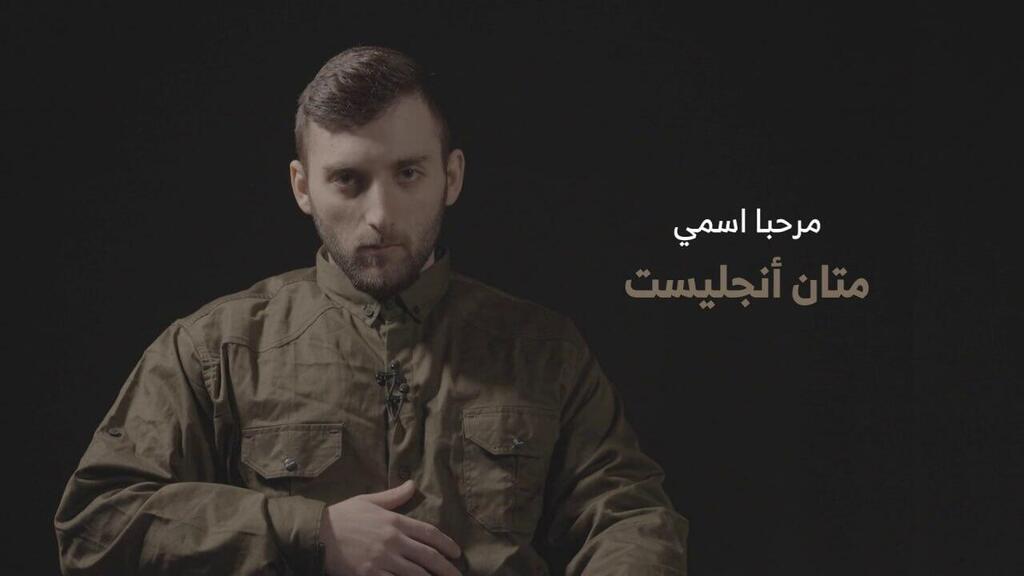
Matan Angrest, 22, a tank crew member from Kiryat Bialik, was captured wounded and unconscious in Nahal Oz. He had been in the tank with Itay Chen and Daniel Peretz, both killed, and Tomer Leibovitz, who also died in combat.
Matan Angrest n sign of life video
His mother, Anat, became a prominent advocate for hostage families. In July 2024, she revealed video evidence of her son alive, discovered in Gaza. The family later shared clips of the brutal mob attack he endured during his abduction. Shortly before Oct. 7, Matan had received a certificate of excellence from his brigade commander.
Elkana Bohbot
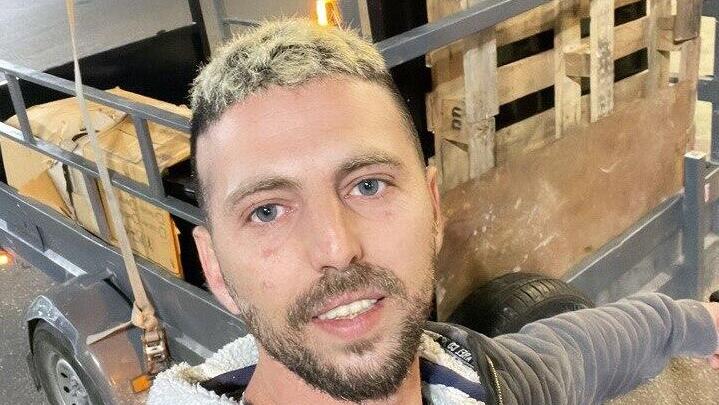
Elkana Bohbot, 35, from Mevaseret Zion, was working on the production team at the Nova festival. He stayed behind to help the wounded.
“He could have run, but he stayed to help,” his wife, Rivka, told lawmakers. “At 8 a.m. we spoke for the last time. He promised to come home. I believe him. Our little boy waits for his dad every day.”
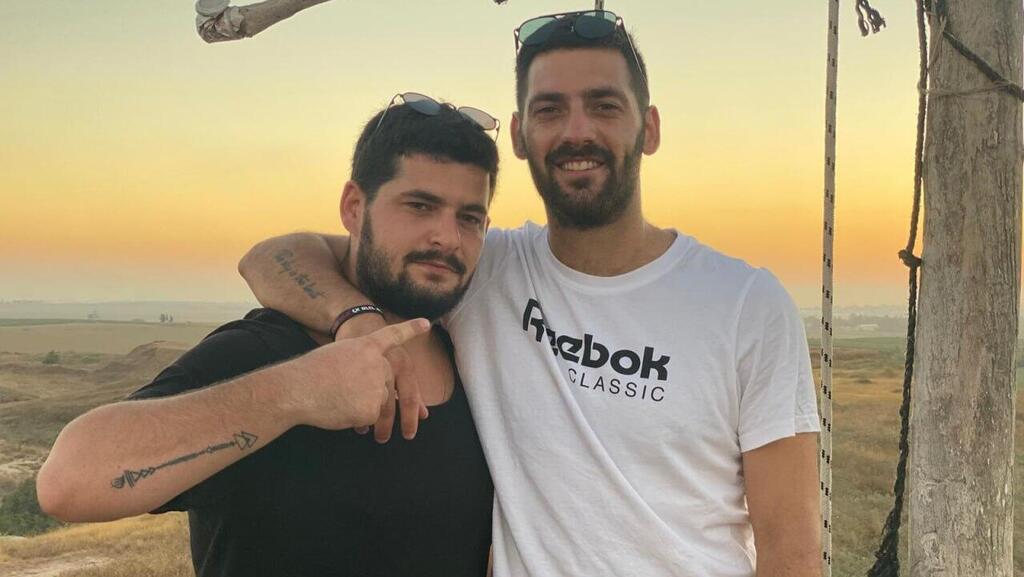
Gali and Ziv Berman, 28-year-old twins, were kidnapped from the youth neighborhood in Kibbutz Kfar Aza. They were the last hostages taken from one of the hardest-hit communities on Oct. 7.
Gali and Ziv Berman
That morning, Gali insisted on checking on Emily Damari, who was home alone. “We hid in a room, and they broke down the door,” Damari later recalled. “I shouted that I was hit in the hand and lost consciousness for a few seconds. They took me and Gali. I told them I’d rather die there.” The twins were taken to Gaza together.
Since Emily’s return, she has campaigned for their release, along with their relative Kavit Maier and brother Liran. Fans of Maccabi Tel Aviv, the twins became symbols in the stands at Bloomfield Stadium during their captivity.
In a previous deal, Hamas released a video showing Guy and Evyatar forced to watch others gain their freedom while they remained behind. Last month, another video showed Guy filmed in Gaza City.
Evyatar David
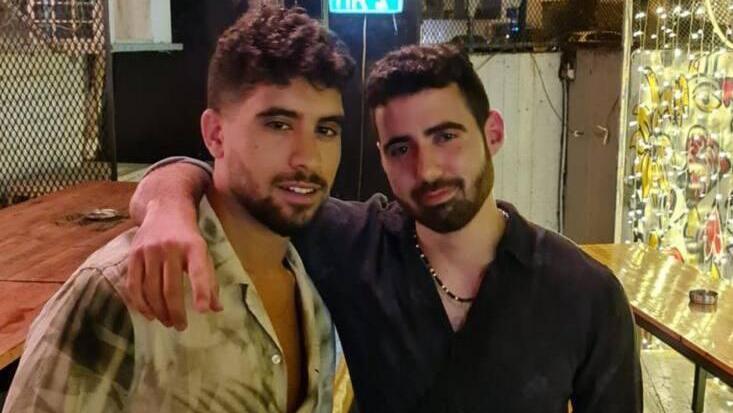
Evyatar David, 24, from Kfar Saba, was at the Nova party with friends Guy Dalal, Ron Tzarfati and Idan Hermati. At 7:42 a.m., he messaged his mother to say he was heading to a car. After that, he stopped responding. Evyatar and Guy were captured. Ron and Idan were murdered.
Guy Gilboa and Evyatar David
By 11 a.m., a video surfaced showing Evyatar and Guy in captivity. In a Hamas video from August, Evyatar appeared emaciated. “I’m not eating. There’s barely water,” he said from a tunnel. He was shown being forced to dig his own grave.
Eitan Horn
Eitan Horn, 38, from Kfar Saba, was visiting his brother Yair in Kibbutz Nir Oz when the two were kidnapped. Eitan, who immigrated from Argentina at age 16, was known as “Eitu.” He had worked as a youth counselor and a Jewish Agency emissary.
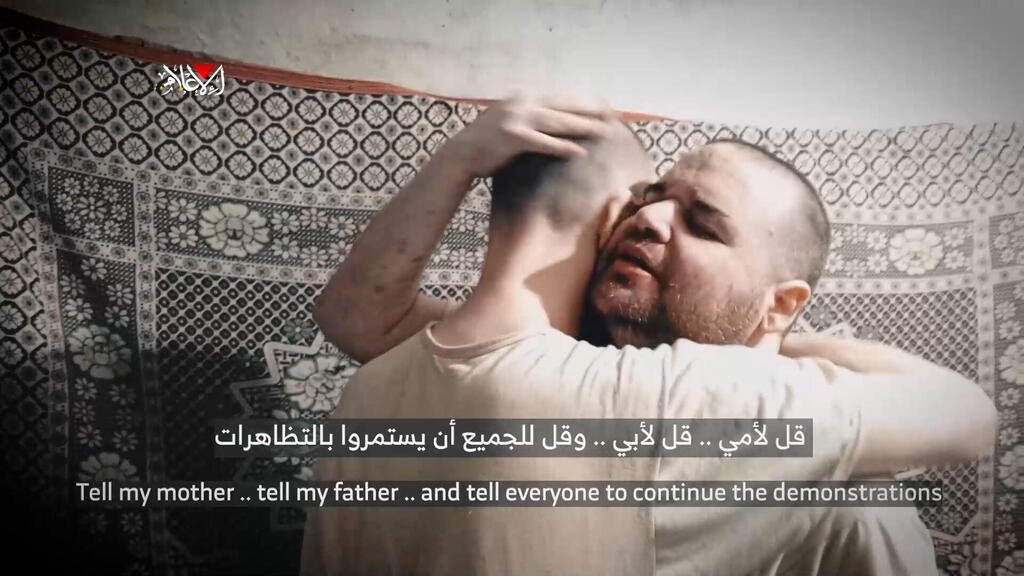
Eitan Horn says goodbye to his brother Iair in a Hamas propoganda video
In a March video, he was seen parting from Iair,who was released in a previous deal. Their mother, Ruti Strom, had fought for both sons' freedom. “Until Eitan comes home, my heart is torn in two,” she said.
Maxim Herkin
Maxim Herkin, 36, from Tirat Carmel, was kidnapped from the Nova party. In February, Hamas said it would “consider” Russia’s request to release him. His daughter and mother hold Russian citizenship, but he remained in Gaza.
Maxim Harkin
His family largely stayed out of the media. Only after the deal was approved did his mother, Tala, speak publicly. “I didn’t sleep all night. This is the best morning of my life,” she said.
Maxim has a daughter, Monica, who lives in Russia with his ex-partner. He had just returned from visiting them when he was abducted.
Nimrod Cohen
Cpl. Nimrod Cohen, 21, was kidnapped from Tank 3 on Oct. 7. He was serving with Capt. Omer Neutra (who was killed), Sgt. Shaked Dahan (killed) and Sgt. Oz Daniel (killed). The tank was stationed near the “White House” outpost between Nir Oz and Nirim.
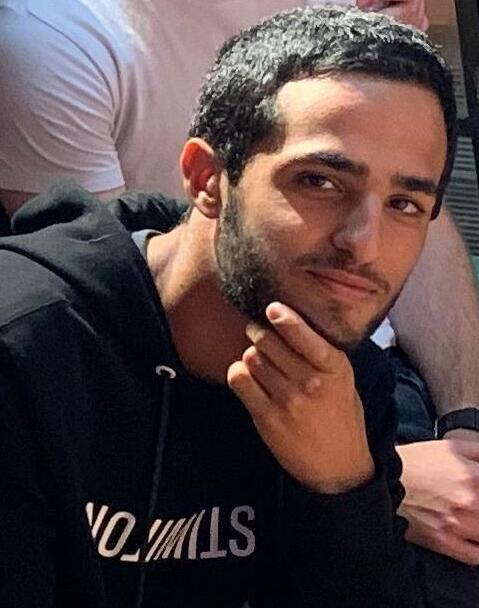
Nimrod Cohen
They had been dealing with repeated disturbances later understood to be part of Hamas’s deception ahead of the attack. Nimrod’s parents saw a video of the tank’s abduction and recognized him leaning against the barrel. In March, his father identified him again in footage of another hostage release, recognizing a tattoo he had gotten days before his abduction.
Segev Kalfon
Segev Kalfon, 27, from Dimona, was kidnapped from the Nova party. His family learned he was taken after footage showed him being loaded into a truck by Hamas gunmen.
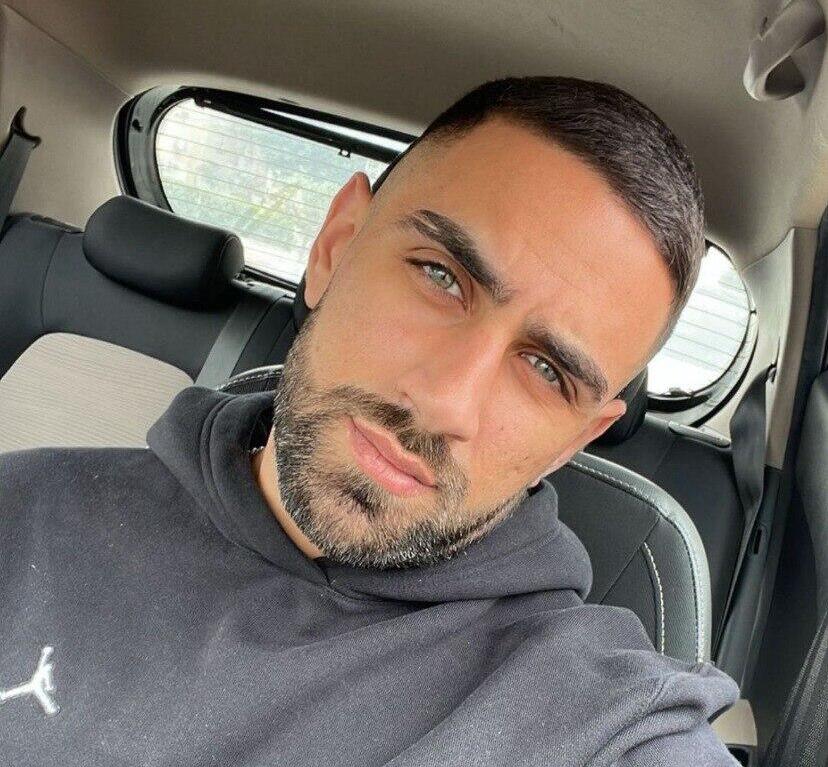
Segev Kalfon
(Photo: Family album)
In July, fellow hostage Ohad Ben Ami, who was released earlier, described Segev’s dire condition. “He said Segev saw him as a father figure and held his hand at night. They were kept in the harshest conditions in Gaza,” Segev’s mother, Galit, said.
Eitan Mor
Eitan Mor, 25, originally from Kiryat Arba and living in Jerusalem, was working as a security guard at the Nova party. When Hamas stormed the event, Eitan tried to escape.
Omri Miran, 48, from Nahal Oz, was kidnapped in front of his wife, Lishi, and daughters Alma and Roni, then ages 2 and 6 months. Armed men entered their home, forced them into a neighbor’s house, then separated the men from the women.
Roni ran after her father, yelling, “Dad, dad, my dad!” Lishi held her back and said to Omri, “I love you. Take care of yourself. Don’t be a hero.”
Matan Zangauker, 25, was taken from his home in Nir Oz along with his girlfriend, Ilana Gritchovsky, who was released in the first hostage deal. The couple had been together for about a year and a half.
His mother, Einav, became a leading voice for hostage families and led Saturday protests in Tel Aviv calling for a deal. Matan was held with Idan Alexander, who was released in April.
Ariel Cunio
Ariel Cunio, 28, from Kibbutz Nir Oz, was kidnapped along with his partner, Arbel Yehud. Of the 20 hostages being released now, he is the only one from whom no proof of life had emerged. His brother, David, was also kidnapped.
David Cunio
David Cunio, 35, also from Nir Oz, was taken with his wife, Sharon Aloni-Cunio, and their 3-year-old daughters, Yuli and Emma. On Oct. 7, David held shut the door of their shelter for five hours as terrorists tried to force it open.
Sharon and the girls were released after 52 days. David remained in Gaza for more than two years. His brother, Ariel, and Arbel Yehud were taken as well. Arbel was freed in a previous deal. Ariel is being released today.
Bar Kuperstein
Bar Kuperstein, who worked as a security guard at the Nova festival, turned 23 in April while in Hamas captivity. His family learned he was taken after seeing a Telegram video showing him bound hand and foot.
His father, Tal, was injured in a car crash and became dependent on care. Since the abduction, he fought for his son's return. “Bar helped the wounded when the terrorists came,” Tal said. “He drove a Ranger into the chaos four times. He could have escaped but went back into the hell. He took a fallen officer’s weapon and fought.” link
Scenes of Joy and Anticipation as Hostages and Prisoners Are Exchanged. Link
Released Israeli hostages reunite with families – in pictures The last 20 living hostages held by Hamas arrive in Israel after more than two years in captivityLink
On a day filled with both relief and heartbreak, members of the Nova Tribe Community Association divide their presence between two deeply emotional events: greeting released hostages returning from Gaza, and mourning the loss of one of their own.
Of the 20 hostages freed by Hamas today, 11 were members of the Nova community — abducted from the Nova music festival near Re’im on October 7, 2023, when Hamas terrorists massacred 378 in the deadliest attack of that day.
While some gathered outside hospitals to welcome home survivors, others attended the funeral of Roei Shalev, a Nova festival survivor who died by suicide last week. Roei’s funeral
As helicopters carrying the newly released hostages landed at hospitals in central Israel, footage showed fellow Nova survivors and supporters standing nearby, cheering and waving from behind barriers.
Elsewhere, a large crowd — many of them survivors of the Nova festival massacre — gathered to bid farewell to Shalev, whose death has shaken a community still struggling to heal from the trauma of October 7.
The Nova Tribe Community Association, formed by survivors and bereaved families, has become a central force in commemorating the victims, supporting mental health recovery, and advocating for the hostages’ release.
An Egyptian official says 154 Palestinian security prisoners who were released and deported by Israel have arrived in Egypt at the Rafah crossing with Gaza.
The freed prisoners are to be sent to third countries as part of the ceasefire deal between Israel and Hamas, says the official, who has direct knowledge of the deal’s implementation. He speaks on condition of anonymity because he is not authorized to brief the media.
The prisoners are among more than 1,900 Palestinians being freed by Israel in exchange for Hamas’s release of its remaining hostages. LinkThe respective Israeli governments who approved Palestinian prisoner releases as part of various deals to get back hostages and end wars, have made the very questionable decision to exile many of these prisoners instead of releasing them back to Gaza or the West Bank. Both in the Gilad Schalit deal 14 years ago and in this deal, the security forces chiefs and intelligence chiefs have been against exiling any of the prisoners and have made strong recommendations to the political echelon not to do it. Unfortunately, these professional recommendations were not approved due to political concerns and a false 'showing of strength'. The reason that the security professionals want them released to Gaza or the West Bank is so that they can continue to keep a close eye on them, and if necessary, either rearrest them or eliminate them. In addition, it has been the exile of many of these prisoners who became the diaspora senior leaders of Hamas and other terror organizations who have had free hands to operate and build the terror network. They have been directly responsible for huge financial networks, building the West Bank arm of Hamas with funding, recruiting, training and financing all of the terror activities. They built operational and training camps and recruited in the refugee camps in Lebanon. They recruit, train and finance Hamas attacks in Europe and the list of their operations goes on and on. This is the direct result of exiling to punish those same prisoners and make an example of them to others not to follow in their footsteps. In the meantime, those are the same exiled released prisoners who have built homes and acquired fortunes for themselves and their families in Qatar, Turkey and Cairo and most likely many other places that they have personally invested in for themselves. This makes them very poor examples of what exile can mean. The decision to exile Hamas terrorists is the worst thing for Israel now and in the future. The security organizations know this very well, as do the politicians. Unfortunately, these politicians make decisions based on factors other than what is good for Israel. Their decisions are firstly based on what is good for them politically and advertising, especially in their election campaigns that they 'got rid' of the worst of the worst to show how smart and powerful they are, but they are actually incredibly stupid and weak and endanger the entire country with their personal politically based decisions. When they do this, I sincerely hope the opposition will show the costs of these decisions to the public.
Nimrod Cohen's family fears he was tortured: 'He is pale and has not seen sunlight' Noga, the aunt of captivity survivor Nimrod Cohen, told ynet that "physically he is thin and weak, pale and has not seen sunlight. You can see on his face that he went through a difficult period and we fear that he also endured torture." She added: "We are optimistic, but we still don't know all the details and are waiting for him to tell us. We have no intention of pressuring him. Despite all this, I also saw his smile. Nimrod is a quiet and gentle boy with a half-shy smile that says it all. We are so happy to see him and that he held on for two years in such conditions. We are happy that we are behind this, that he managed to get through it safely.
A moment of gratitude: to the fallen IDF soldiers and the wounded who made the hostage deal possible
As Israel celebrates the return of the hostages and dares to hope this long, brutal war may be nearing its end, it is also a time to pause, with broken hearts, to thank the IDF soldiers - the fallen and the wounded
And now, with the great joy over the return of the hostages—those alive and those who will never come home—and with a drop of optimism flowing back into our lives at the thought that this terrible war, now in its second year, may finally be drawing to a close, we can pause for a moment. For more than a moment. With broken hearts, we can say thank you.
Thank you to those who are no longer with us, to all who were killed in this war—915 IDF soldiers in active service, reserves and career positions. They will forever remain young. Just a little over a week ago, during the Yom Kippur prayer, we asked that they rest in peace, while those who loved them will never find peace themselves. Their hearts will remain shattered, their longing unrelenting even decades later. These are the ones who promised to return but could not, because a deep, powerful voice called them away. As King David said in his mourning for his son Absalom: we will go to them, but they will not return to us.
A great thank-you to those wounded in body, who have paid—and will continue to pay—the price of this war. Our hearts break again and again as we see them. And a great thank-you to those wounded in spirit, whose eyes have seen what we will never see, whose ears have heard what we will never hear, and who relive it every day. They carry sorrow without beginning or end.
An immense thank-you to everyone who fought in this war: those who left behind homes, wives, children, parents; who sought no excuses, who did not turn back at their doorstep. Those who were there for endless months, day after day after day, their hearts weighed down by dusty uniforms, heavy packs, and weary eyes. Those who never gave up, who fought with courage and devotion—lionhearted in every sense.
Thank you to all who fought, to those who paid with their lives, their bodies, or their souls. To those who continue to bear the cost of death, of injury, of absence—even after returning home.
Israeli security forces pay their respects as the convoy carrying the bodies of four hostages arrives at the Abu Kabir Forensic Institute in Tel Aviv, on October 13, 2025 (Dor Pazuelo/Flash90)
The bodies of the four hostages Hamas returned to Israel last night have been identified by forensic experts, and their families have been notified, the military says.
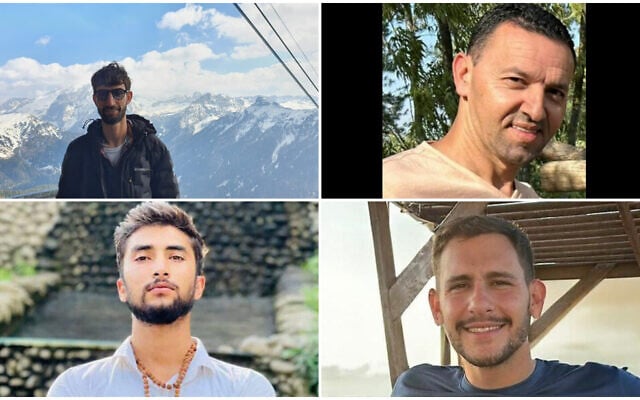
The IDF says its representatives notified the families of Guy Illouz, 26, Nepal national Bipin Joshi, 23, and two other hostages whose names will be published later, that their bodies were returned.
According to the military, citing intelligence information, Illouz was wounded and kidnapped alive by Hamas terrorists near the Tel Gama area on the Gaza border, after fleeing the Nova party near Re’im on the morning of October 7, 2023.
Illouz died of his wounds during his captivity in Gaza after not receiving medical treatment, the IDF says.
Joshi, a Nepali agricultural student whose death had not been formally confirmed by Israel until now, was abducted from a bomb shelter at Kibbutz Alumim.
The IDF says it assesses that he was murdered in captivity during the first months of the war.
Final conclusions will be determined once the Abu Kabir forensic institute completes examinations into the circumstances of their deaths, the IDF adds.
The military again repeats that “Hamas is required to abide by the agreement and make the necessary efforts to return all the bodies,” after the terror group returned only the bodies of four of the 28 dead hostages yesterday.
Top row (L-R) Guy Illouz, Yossi Sharabi, 2nd row (L-R) Bipin Joshi, Daniel Perez
The Hostage and Missing Families Forum demands a “severe response” from the government after Hamas said it would only be returning the bodies of four of the 28 dead hostages.
The forum demands an “immediate halt to the implementation of the agreement until the full and complete release of all the fallen.”
“The violation of the agreement by Hamas must be met with a very severe response from the government and the mediators,” the forum says.
“An agreement must be respected by both sides, if Hamas does not fulfill their part, Israel should not fulfill its part either,” the forum says.
“We demand all 28 hostages. We will not give up on anyone, down to the last hostage,” says the forum.
Hamas said a short while ago that it will return the bodies of slain hostages Guy Illouz, Yossi Sharabi, Bipin Joshi and Daniel Perez today.
The terror group has told mediators it does not know where some of the bodies of slain hostages are located, which may delay their return to Israel.
According to the Kan public broadcaster, Israeli mediators are intensively working to try to get the number of bodies released today increased. Link. We don't know yet why Hamas has only released the bodies of 4 of the 28 dead hostages. It was the understanding of most of the public that they definitely knew the locations of up to 18 of the bodies and that as many as 10 would be a problem. That is the reason that an international search body was formed that will consists of Israel, Turkey, Egypt and others to search for the remaining bodies. They will be using intelligence gathered until now about potential locations and they will be aggressively gathering more intelligence both from Hamas members who are in Israeli prisons and from sources in Gaza. Once an alternative Palestinian government is in place in Gaza along with the international security forces, I assume that rewards will be offered for definitive information leading to bodies of hostages, and because Hamas will no longer be in a governing or military position, most people who have some information will be far more willing to come forward. The great fear and reality is that some of the hostage's bodies will never be found. The great danger with the current situation is that Netanyahu and his extremist government will want to quickly grab on to this problem and go back to the war. Netanyahu will see it as helping his political war of survival and give him the ammunition to say "I told you so" in that Hamas needs to be 'completely destroyed' which is an impossibility, but that won't stop him. The only thing that will stop him is the actions of the Americans to solve the issue and I know that they are working very hard to do so.
IDF Spokesman Brig. Gen. Effie Defrin says Israel is demanding that Hamas uphold its end of the deal, after it said it only intends to return the bodies of four of the 28 slain hostages being held in the Gaza Strip.
“We have been informed that later today, approximately four fallen hostages will be returned. Even at this hour, efforts are being made at all levels to exert pressure for the continuation of the process to return the bodies of the fallen,” Defrin says in a video statement.
“We demand that Hamas uphold its part of the agreement. We do not forget them (the hostages) for a moment and will not rest until all return to their families and to burial in Israel,” he says.
Hamas said a short while ago that it will return the bodies of slain hostages Guy Illouz, Yossi Sharabi, Bipin Joshi, and IDF officer Cpt. Daniel Perez today.
The terror group has told mediators it does not know where some of the bodies of slain hostages are located, which may delay their return to Israel.
The statement does not specify when the transfer will take place.
The fate of Joshi, a Nepali agricultural student, had not been confirmed by Israel, but it has expressed “grave concern” about him.
Illouz was taken from the Nova festival and succumbed to his wounds in a Gaza hospital, apparently due to lack of medical treatment. His death was confirmed in December 2023.
Perez, 22, a platoon commander in the 7th Armored Brigade’s 77th Battalion, from Yad Binyamin, was killed battling Hamas on October 7, 2023.
Sharabi, 53, the brother of freed hostage Eli Sharabi, from Kibbutz Be’eri, was kidnapped from his home on October 7 and slain in captivity
Slain hostage’s mother: Government betrayed families whose loved ones remain in Gaza Yael Adar says Hamas hasn’t broken deal, Israel didn’t give deadline for return of bodies; reports: Israel threatened sanctions on Hamas, mediators do not believe deal in jeopardy
People carry flowers and Israeli flags upon the arrival of vehicles transporting the bodies of four hostages, in front of the National Center for Forensic Medicine in Tel Aviv on October 13, 2025. The Hebrew sign reads, "Sorry." (Jalaa MAREY / AFP)
Yael Adar, the mother of slain hostage Tamir Adar, on Monday night delivered a searing criticism of the Israeli leadership’s handling of the issue of the return of hostages’ bodies, charging that the government “betrayed” families like hers whose loved ones were killed in captivity and have not been returned.
Adar said in a Channel 12 news interview that she had asked officials ahead of the hostage deal announced last week what leverage Israel would have to recover the bodies of the 28 dead hostages held by Hamas, only four of whom were returned Monday.
Hamas was supposed to return all 48 hostages, living and dead, by Monday, but had warned that it would have trouble locating some of the dead bodies.
“They told me that [under the terms of the deal] a live hostage is worth 100 Palestinian prisoners, including life-termers,” she said. “But a dead hostage is worth 15 Palestinian bodies.” She said this was obviously insufficient and that she asked, “Why not 100 dead Palestinians?”
Hamas did not definitively breach the agreement signed in Sharm on Thursday setting out the terms of the releases, she said, arguing that, because of the way it was drafted, “Israel agreed there was no [absolute] deadline.”
The terms of the deal were not binding as regards what might happen if Hamas failed to return all the bodies, with some leeway for ongoing searches for the bodies, which she said might go on for months or years.
Yael Adar, mother of slain captive soldier Tamir Adar, speaks at a memorial event at Hostages Square in Tel Aviv, February 20, 2025. (Alon Gilboa/Pro-Democracy Protest Movement)
“I fought for Tamir’s return and in the end I will receive a coffin, not someone I can hug, or look at. Now our mission is to find him as quickly as possible and then begin to cope with the loss and the mourning process. Difficult days are ahead,” she said.
Adar also criticized Knesset Speaker Amir Ohana for removing his hostage pin ahead of US President Donald Trump’s speech in the Knesset Monday, saying it symbolized an attitude that the hostage issue “is over.”
Her remarks came as questions mounted over Hamas’s compliance with the “Comprehensive End of Gaza War” document signed last Thursday in Sharm el-Sheikh. The deal stipulated that Hamas had to release within 72 hours of the ceasefire — by noon Monday — all 20 living hostages, as it did, and the bodies of all dead hostages it holds or can locate.
But the document also leaves open, in the multiple sub-clauses of point 5, the possibility that if Hamas has information about the whereabouts of deceased hostages whose bodies it cannot retrieve within that timeframe, those details will be transferred to mediators for follow-up at a later stage.
The terms of Trump’s original 20-point Gaza peace plan were clearer and more succinct: Point 4 stated: “Within 72 hours of Israel publicly accepting this agreement, all hostages, alive and deceased, will be returned.” Point 5 added: “Once all hostages are released, Israel will release 250 life sentence prisoners plus 1,700 Gazans who were detained after October 7, 2023, including all women and children detained in that context. For every Israeli hostage whose remains are released, Israel will release the remains of 15 deceased Gazans.”
According to a CNN report published last week, three Israeli officials confirmed that Hamas may not be able to find all of the 28 dead hostages. Prime Minister Benjamin Netanyahu has known for months that this is the case, according to the officials. One official said that seven to nine bodies might not be retrieved, while another put that figure at between 10 and 15. There had been no suggestion ahead of today’s deadline that Hamas might release as few as four of the 28 bodies.
After Adar’s interview, Channel 12 reported that Qatari officials had informed Israeli representatives in Sharm el-Sheikh last week that Hamas held 15 to 16 hostages’ bodies ready to return, and was looking for more.
According to Tuesday morning reports in Hebrew media, Israel set the end of Tuesday as a deadline for progress on the issue.
Mediators have said the terror group will have trouble locating all of the bodies; however, according to the Kan public broadcaster, Israel believes Hamas is already holding some of the bodies, but did not hand them over.
People carry flowers and Israeli flags upon the arrival of vehicles transporting the bodies of four hostages, in front of the National Center for Forensic Medicine in Tel Aviv on October 13, 2025. (Jalaa Marey/AFP) A source familiar with the matter told Kan that “the writing was on the wall, but only now are we discussing in any significant way the options for response.”
The source said that Israel does not have enough effective leverage on the issue.
According to Channel 12, Israel is threatening sanctions on Hamas if the group does not return all the bodies in its possession in a timely manner, though the report did not specify what type of sanctions Israel could deploy.
An Arab diplomat from a mediating country told Haaretz that mediators were working on the issue, and do not believe that the Gaza agreement is in jeopardy.
Late Monday, after the last 20 living hostages were returned to Israel, Hamas handed over four caskets, which the group said contained the bodies of Guy Illouz, Yossi Sharabi, Bipin Joshi and Daniel Perez.
The caskets were taken to the Abu Kabir forensic institute in Tel Aviv for identification. Hamas has in the past sent back unrelated bodies instead of hostages. link
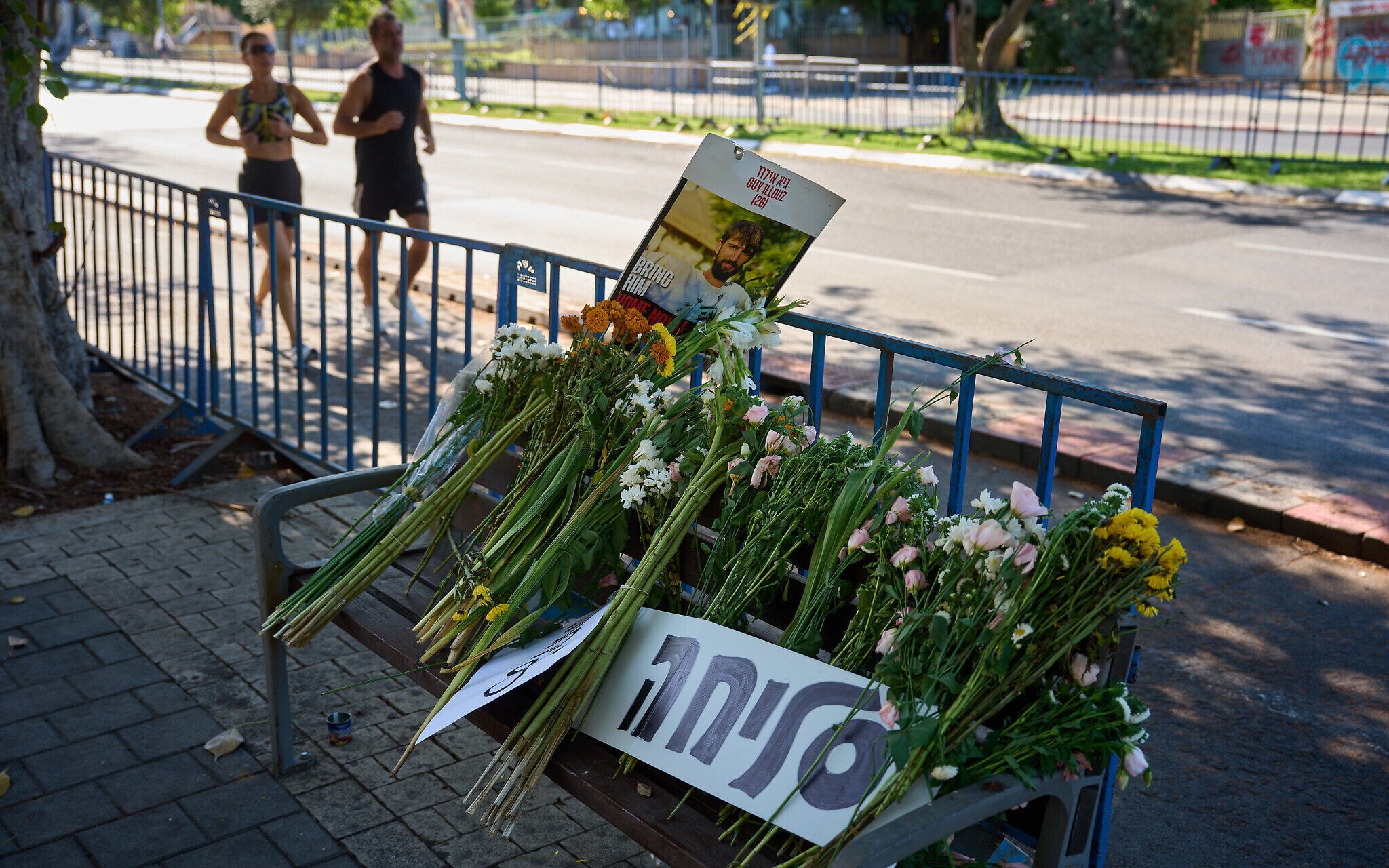
Flowers and a sign written in Hebrew that reads 'Sorry' are placed on a bench outside Abu Kabir, the forensic institute where the identification process is being carried out on the four hostage bodies that were handed over by Hamas in the Gaza Strip, in Tel Aviv, Oct. 14, 2025. (AP Photo/Emilio Morenatti)
The security establishment has recommended to the political echelon that the transfer of “the full amount of” aid to Gaza should be halted, and the Rafah border crossing not opened, until the bodies of 24 dead hostages are handed over by Hamas, the Kan public broadcaster reports.
Channel 12 news cites an unnamed official who says that Israel believes that there is no “motivation” for Hamas to return the bodies.
Yesterday, the terror group released 20 living hostages and transferred the bodies of four dead hostages, with 24 bodies still remaining in Gaza.
The families of the hostages have accused the government of evading responsibility and giving up leverage it has on the matter.
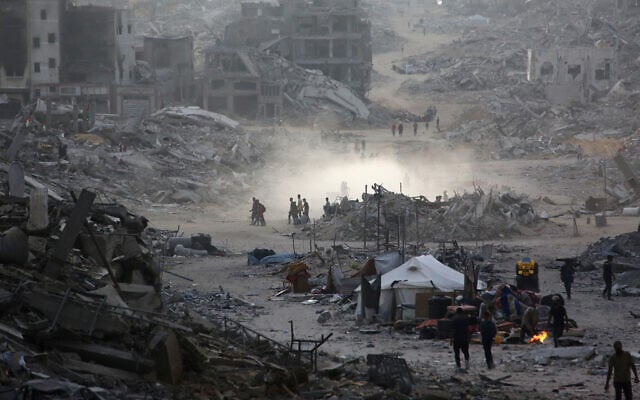
Palestinians make their way past destroyed buildings in Gaza City on October 12, 2025. (Bashar TALEB / AFP)
Gaza’s Hamas-run health ministry claims that the bodies of 60 Palestinians have been recovered from under the rubble of destroyed buildings and brought to hospitals in the last 24 hours.
That brings the number of recovered bodies to 200 in the past four days since the ceasefire between Israel and Hamas took effect and Israeli troops pulled back from some parts of Gaza.
The Hamas ministry says many dead are still under the rubble, particularly in areas inaccessible to first responders.
In total, the terror group claims more than 67,800 Gazans have been killed in the war, though the figure isn’t confirmed and doesn’t distinguish between civilians and terror operatives. Israel says it has killed over 22,000 combatants in battle as of August and another 1,600 terrorists inside Israel during and immediately following the October 7, 2023, onslaught.
Northern Israel, Lebanon and Syria
West Bank, Jerusalem, Israel and Terror Attacks
Politics and the War and General News
A secret memo reveals: Sinwar’s murderous orders in the October 7 massacre
A handwritten memo attributed to Yahya Sinwar, which was found in an underground complex in May 2025, includes alleged instructions to attack civilians, set neighborhoods on fire and broadcast acts of violence
An internal Hamas document and an intercepted secret communication determine that the October 7, 2023 attack was meticulously planned by Yahya Sinwar, Hamas’s leader in Gaza, and included explicit orders to attack civilians, to set neighborhoods on fire and to broadcast the acts of horror with the aim of sowing fear and instability in Israel. The document — a six-page handwritten memorandum in Arabic — was found in May 2025 on a computer that was not connected to the network, in an underground complex used by Muhammad Sinwar, a senior Hamas commander and Yahya’s brother.
In an investigation by The New York Times, based on seven official Israeli sources, it is claimed that the memo, dated August 24, 2022, was allegedly written by Yahya Sinwar and included detailed instructions for the attack. The document calls on terrorists to attack soldiers and civilian communities, and also to broadcast the violent acts in order to instill fear among Israeli civilians and to undermine the state’s stability. The memo demanded preparation of “two or three operations in which an entire neighborhood, a kibbutz or something similar will be burned, using gasoline or diesel from a tanker.”
Hamas terrorists October 7, 2023
Similar instructions were given by Hamas commanders to terrorists in the field on October 7, according to recordings collected during hours of intercepted calls between commanders and their subordinates by Unit 8200 (Intelligence Unit) of the IDF, and revealed by The New York Times. Among other things, commanders were heard ordering: “Start setting houses on fire,” “Burn, burn, I want the whole kibbutz to be in flames,” and also “Burn everything.” In addition, calls were heard such as “Slaughter them,” “Take many hostages,” and “Kill everyone you meet on the way.”
Israeli sources emphasized that the memo proves Sinwar intended his terrorists to attack civilians from the outset, contrary to the public claims of the Hamas leadership. According to a classified report by the Gazit Institute that reviewed the materials, the goal of the attack was “to cause great chaos in the country and in the army.” Also included in the memo is a call to broadcast the acts of horror to the Arab world in order to recruit supportive positions and encourage joining the struggle.
Sima Ancona, a former document identification expert at the police, confirmed at the request of The New York Times that the handwriting in the memo matches other samples of Yahya Sinwar’s handwriting. On the other hand, Azzat al-Rishq, director of Hamas’s communications office in Qatar, did not respond to detailed questions regarding the document. A Palestinian analyst close to Hamas, Ibrahim Madhoun, cast doubt on the authenticity of the memo and argued that most of the acts described in it, such as burning entire neighborhoods, did not occur in the attack, although during the attack many houses were set on fire.
These documents are part of the intelligence trove that came into the IDF’s hands during the war, and include also a document published by “Maariv” that describes, according to reports, the mood inside Hamas leading up to the attack, the relationships between Hamas, Hezbollah and Iran, and Hamas’s full plan — which, according to the documents, the leadership believed the October 7 attack would bring about the destruction of the State of Israel. The document was even directed, according to reports, to Hassan Nasrallah, the leader of Hezbollah, and was intended to serve as an explanation for non-participation in the campaign. link
Aharon Mizrahi, 76, a resident of Ramat Gan, who was hit by an Iranian missile during Operation Rising Lion, died from his injuries last night, according to Hebrew news outlets.
MAY HIS MEMORY BE A REVOLUTION
Iran retaliated to Israel’s June strikes targeting Tehran’s nuclear program and military sites by launching over 500 ballistic missiles and around 1,100 drones at Israel.
The attacks killed 32 people and wounded over 3,000 in Israel, according to health officials and hospitals. Link
The Region and the World
Saudi royal source: Normalization with Israel possible with different gov't - N12
The Saudi royal source said that he believes that normalization with Israel will happen once Israel elects a new government.
A Saudi source from the Gulf nation's royal family told N12 News that the country is willing to normalize relations with Israel when Jerusalem has a different government that will recognize a two-state solution.
The source believes it will happen once Israel elects a new government.
“Normalization likely won’t happen under Netanyahu’s current government,” the royal family source told N12.
“But maybe it will happen before the end of October 2026 — meaning more than a year from now — if a new government is formed that accepts the two-state principle and ends the Middle East crisis once and for all, God willing.”
Normalization will certainly take place once Israel’s security is guaranteed by all the Arab League states, the Gulf Cooperation Council, and the Organization of Islamic Cooperation unanimously,” he said. “Gaza and the West Bank will be demilitarized, and you’ll see the Saudi royal family — myself included — buying homes in Nahariya and vacationing there twice a year.”
This comes after a Saturday report from theWashington Post found that a host of Arab countries, including Bahrain, Egypt, Jordan, Saudi Arabia, Qatar, and the United Arab Emirates, expanded their military coordination with Israel during the Israel-Hamas War.
The report added that the nations bolstered their military cooperation with Israel as they publicly condemned the war in Gaza.
What will the next election bring for Israeli-Saudi relations?
The source added that he believes that Netanyahu's predecessor will face a difficult future.
“After the elections at the end of October 2026, Likud is expected to lose, and Israel will pay a heavy price for the misguided policies pursued by Netanyahu and the Kahanist right,” the source said. “Whoever comes after him won’t be able to fix all the mistakes — one after another.”
This comes after a Friday poll from Maarivfound that Netanyahu's government was expected to secure 51 seats, while the opposition is expected to obtain 59 seats.
However, a Maariv poll from last week found that 51% of respondents favor Netanyahu, while 49% back former prime minister Naftali Bennett.
Personal Stories
Acronyms and Glossary
COGAT - Coordination of Government Activities in the Territories
ICC - International Criminal Court in the Hague
IJC - International Court of Justice in the Hague
IPS - Israel Prison System
MDA - Magen David Adom - Israel Ambulance Corp
PA - Palestinian Authority - President Mahmud Abbas, aka Abu Mazen
PMO- Prime Minister's Office
UAV - Unmanned Aerial vehicle, Drone. Could be used for surveillance and reconnaissance, or be weaponized with missiles or contain explosives for 'suicide' explosion mission
Join my Whatsapp update group https://chat.whatsapp.com/IQ3OtwE6ydxBeBAxWNziB0 Twitter - @LonnyB58
Bluesky - @lonny-b.bsky.social My blogs in The Times of Israel my blogs Substack - https://lonnyb.substack.com/
#BringThemHomeNow#TurnTheHorrorIntoHope
There is no victory until all of the hostages are home!
🎗️Day 740 that 21 of our hostages are still in Hamas captivity 🎗️ **There is nothing more important than getting them home! NOTHING!** "The time has come, the 'return' in October" (return and seventh or homonyms in Hebrew) “I’ve never met them, But I miss them. I’ve never met them, but I think of them every second. I’ve never met them, but they are my family.
We are continuously learning of more and more of the information that the powers that be had prior to October 7 and did little to nothing. So much is still not known. Most will come out in the Official Committee of Inquiry after the war, but some of that information will not be made public due to security concerns. Following is the information that is public knowledge as of today and is documented. It is presented relatively chronologically but some aspects ran in parallel throughout same and different periods of time. 1. Six years ago, Hamas launched its own television station: Al-Aqsa TV. The station quickly became a highly-effective propaganda tool, which Hamas continues to use to preach its message of hatred of the West, Jews, and Israel. “A fictional series on Palestinian TV last year seemingly predicted key elements of Hamas’ Oct. 7 sneak assault on Israel — from the terrorists’ white vans to targeted kibbutzim and the abduction of Israeli soldiers.” 1 ...
🎗️Day 736 that 48 of our hostages are still in Hamas captivity 🎗️ **There is nothing more important than getting them home! NOTHING!** "The time has come, the 'return' in October" (return and seventh or homonyms in Hebrew) “I’ve never met them, But I miss them. I’ve never met them, but I think of them every second. I’ve never met them, but they are my family.


 Alon Ohel in sign of life videoYosef-Haim OhanaYosef-Haim Ohana, 24, from Kiryat Malakhi, was taken from the Nova party in Re’im. He had worked as a bartender and stayed behind to help evacuate the wounded.
 Yosef-Haim Ohana in sign of life video(Photo: Hostage Families Forum via Whatsapp)“A friend told me that when the shooting started, they were helping the injured get to ambulances,” his mother, Miri, said. “They tried to run toward the main road, but someone fired an RPG. Yosef-Haim ran left. The friend ran right and hid under a car. He saw Yosef-Haim peek from behind a nearby car, and then he disappeared.”The first video of Yosef Chaim surfaced in March, showing him with fellow hostage Elkanah Bohbot. Another video appeared in May. “I see the distress on his face,” said his father, Avi.Avinatan OrAvinatan Or, 32, from Tel Aviv, was kidnapped from the Nova festival along with his girlfriend, Noa Argamani, who was freed on June 8 in Operation Arnon. One of the most widely seen videos from Oct. 7 shows Argamani being forcibly separated from him as they were taken into Gaza.
 Avinatan OrIn March, a video showed Avinatan alive. His family was told he had been held in harsh conditions in central Gaza camps. “Until Avintan comes home, my heart is captive,” Argamani wrote in a social media post.His father, Yaron, repeatedly called for increased military pressure on Hamas. In April, his brother, Moshe Or, gave an interview to Al Jazeera urging a comprehensive hostage deal — which was ultimately reached six months later.Rom BreslavskiRom Breslavsky, 21, was working security at the Nova festival. After his abduction, accounts of his bravery circulated widely. He reportedly helped many flee the attack.
 Rom Breslavski“He showed unimaginable courage,” his father said. His mother, Tami, added, “He didn’t see danger or death. Without a weapon or vehicle, he ran between locations and helped people against all odds.”One survivor recalled being rescued by Rom from inside a garbage compactor: “We hid with about 30 others. The terrorists sprayed it with bullets. I heard a voice after I hung up with my mom — it was Rom. He said, ‘I’m Rom, from the army. I’ll get you out. I’ll protect you.’”Matan AngrestMatan Angrest, 22, a tank crew member from Kiryat Bialik, was captured wounded and unconscious in Nahal Oz. He had been in the tank with Itay Chen and Daniel Peretz, both killed, and Tomer Leibovitz, who also died in combat.
 Matan Angrest n sign of life videoHis mother, Anat, became a prominent advocate for hostage families. In July 2024, she revealed video evidence of her son alive, discovered in Gaza. The family later shared clips of the brutal mob attack he endured during his abduction. Shortly before Oct. 7, Matan had received a certificate of excellence from his brigade commander.Elkana BohbotElkana Bohbot, 35, from Mevaseret Zion, was working on the production team at the Nova festival. He stayed behind to help the wounded.“He could have run, but he stayed to help,” his wife, Rivka, told lawmakers. “At 8 a.m. we spoke for the last time. He promised to come home. I believe him. Our little boy waits for his dad every day.”
 Elkana Bohbot(Photo: Courtesy of the family)Their son, Ram, was 3 when Elkana was taken. In a video released in April, Elkana addressed him: “Rami, I know you’re turning 5 next month. Take care of Mom. You’re the man of the house now.”Gali and Ziv BermanGali and Ziv Berman, 28-year-old twins, were kidnapped from the youth neighborhood in Kibbutz Kfar Aza. They were the last hostages taken from one of the hardest-hit communities on Oct. 7.
 Gali and Ziv BermanThat morning, Gali insisted on checking on Emily Damari, who was home alone. “We hid in a room, and they broke down the door,” Damari later recalled. “I shouted that I was hit in the hand and lost consciousness for a few seconds. They took me and Gali. I told them I’d rather die there.” The twins were taken to Gaza together.Since Emily’s return, she has campaigned for their release, along with their relative Kavit Maier and brother Liran. Fans of Maccabi Tel Aviv, the twins became symbols in the stands at Bloomfield Stadium during their captivity.Guy Gilboa DalalGuy Gilboa Dalal, 23, from Alfei Menashe, was kidnapped from the Nova festival. He had attended with his brother Gal, who escaped. That morning, Guy was filmed inside Gaza with fellow hostage Evyatar David.
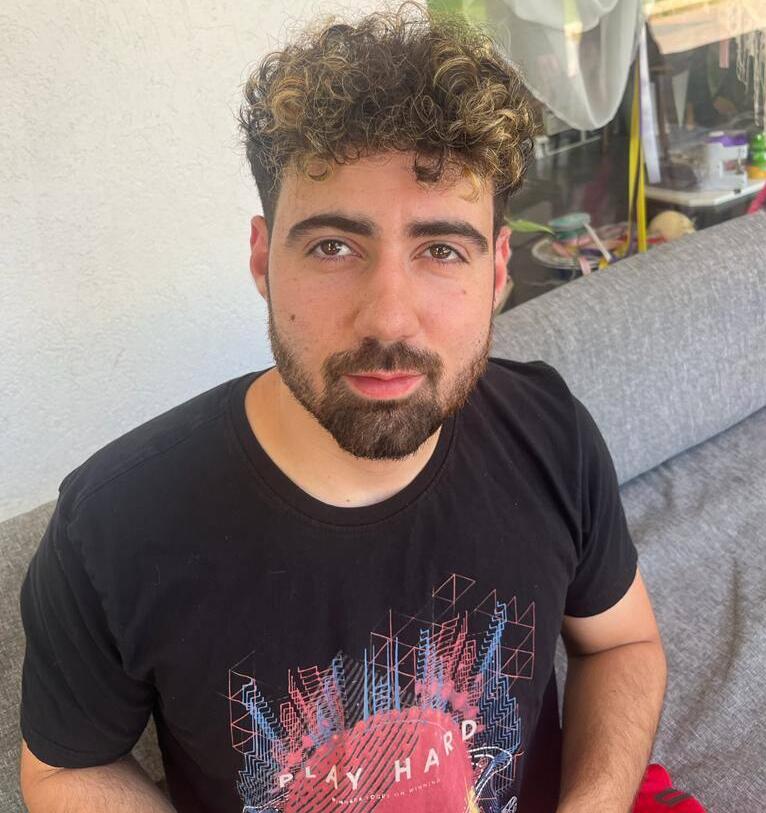 Guy Gilboa Dalal(Photo: Family album)Before the party, Guy promised his father he’d help take down the sukkah after the holiday. It stayed up for two years, waiting for him. He now returns on the eve of Simchat Torah, the same date he was abducted.In a previous deal, Hamas released a video showing Guy and Evyatar forced to watch others gain their freedom while they remained behind. Last month, another video showed Guy filmed in Gaza City.Evyatar DavidEvyatar David, 24, from Kfar Saba, was at the Nova party with friends Guy Dalal, Ron Tzarfati and Idan Hermati. At 7:42 a.m., he messaged his mother to say he was heading to a car. After that, he stopped responding. Evyatar and Guy were captured. Ron and Idan were murdered.
 Guy Gilboa and Evyatar DavidBy 11 a.m., a video surfaced showing Evyatar and Guy in captivity. In a Hamas video from August, Evyatar appeared emaciated. “I’m not eating. There’s barely water,” he said from a tunnel. He was shown being forced to dig his own grave.Eitan HornEitan Horn, 38, from Kfar Saba, was visiting his brother Yair in Kibbutz Nir Oz when the two were kidnapped. Eitan, who immigrated from Argentina at age 16, was known as “Eitu.” He had worked as a youth counselor and a Jewish Agency emissary.
 Eitan Horn says goodbye to his brother Iair in a Hamas propoganda videoIn a March video, he was seen parting from Iair, who was released in a previous deal. Their mother, Ruti Strom, had fought for both sons' freedom. “Until Eitan comes home, my heart is torn in two,” she said.Maxim HerkinMaxim Herkin, 36, from Tirat Carmel, was kidnapped from the Nova party. In February, Hamas said it would “consider” Russia’s request to release him. His daughter and mother hold Russian citizenship, but he remained in Gaza.
 Maxim HarkinHis family largely stayed out of the media. Only after the deal was approved did his mother, Tala, speak publicly. “I didn’t sleep all night. This is the best morning of my life,” she said.Maxim has a daughter, Monica, who lives in Russia with his ex-partner. He had just returned from visiting them when he was abducted.Nimrod CohenCpl. Nimrod Cohen, 21, was kidnapped from Tank 3 on Oct. 7. He was serving with Capt. Omer Neutra (who was killed), Sgt. Shaked Dahan (killed) and Sgt. Oz Daniel (killed). The tank was stationed near the “White House” outpost between Nir Oz and Nirim.
 Nimrod CohenThey had been dealing with repeated disturbances later understood to be part of Hamas’s deception ahead of the attack. Nimrod’s parents saw a video of the tank’s abduction and recognized him leaning against the barrel. In March, his father identified him again in footage of another hostage release, recognizing a tattoo he had gotten days before his abduction.Segev KalfonSegev Kalfon, 27, from Dimona, was kidnapped from the Nova party. His family learned he was taken after footage showed him being loaded into a truck by Hamas gunmen.
 Segev Kalfon(Photo: Family album)In July, fellow hostage Ohad Ben Ami, who was released earlier, described Segev’s dire condition. “He said Segev saw him as a father figure and held his hand at night. They were kept in the harshest conditions in Gaza,” Segev’s mother, Galit, said.Eitan MorEitan Mor, 25, originally from Kiryat Arba and living in Jerusalem, was working as a security guard at the Nova party. When Hamas stormed the event, Eitan tried to escape.A survivor said he last saw Eitan helping move the bodies of two young women to safety. His parents said that in captivity, he served as “the spokesperson of the hostages.”Omri MiranOmri Miran, 48, from Nahal Oz, was kidnapped in front of his wife, Lishi, and daughters Alma and Roni, then ages 2 and 6 months. Armed men entered their home, forced them into a neighbor’s house, then separated the men from the women.Roni ran after her father, yelling, “Dad, dad, my dad!” Lishi held her back and said to Omri, “I love you. Take care of yourself. Don’t be a hero.”A video of Omri with fellow hostage Keith Siegel surfaced in April. Another, released on Holocaust Remembrance Day, showed him shouting from a tunnel: “I miss my daughters, my wife, my whole family. It’s very hard.”Matan ZangaukerMatan Zangauker, 25, was taken from his home in Nir Oz along with his girlfriend, Ilana Gritchovsky, who was released in the first hostage deal. The couple had been together for about a year and a half.


Top row (L-R) Guy Illouz, Yossi Sharabi, 2nd row (L-R) Bipin Joshi, Daniel Perez






Comments
Post a Comment